
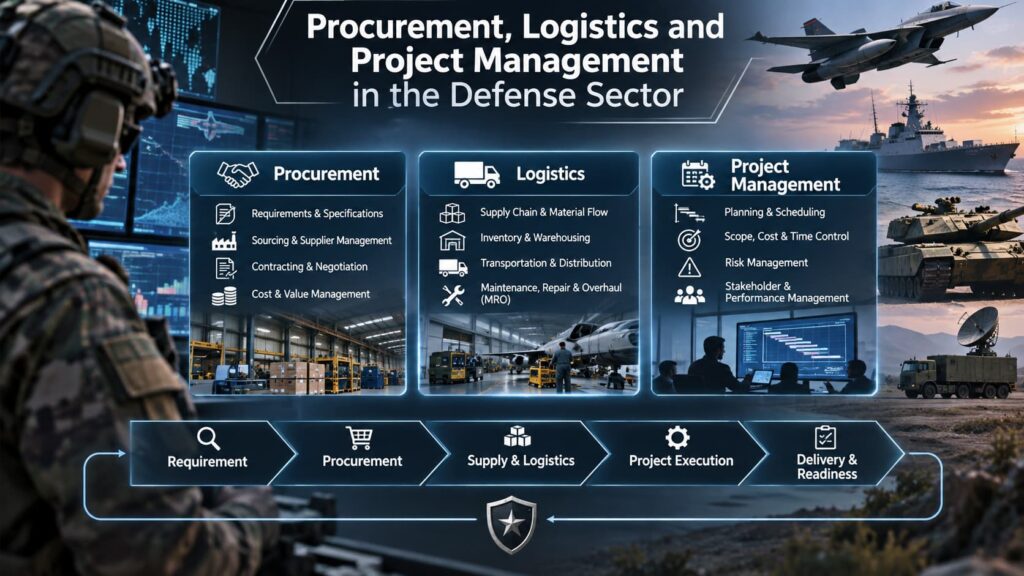
Defense projects require more than access to equipment and services. Successful project execution depends on coordinated procurement, reliable logistics, qualified suppliers, regulatory compliance, infrastructure capabilities, and effective communication between multiple stakeholders.
For organizations operating across international markets, these requirements can become even more complex. Companies and government-related organizations may need to work with suppliers, contractors, logistics providers, infrastructure companies, and other strategic partners across different countries.
Virginia Defense Group supports this environment by providing procurement coordination, logistics support, infrastructure connections, and strategic advisory services, with a particular focus on facilitating cooperation between U.S.-based organizations and qualified partners in Türkiye.
What Is Defense Procurement Management?
Defense procurement management involves the planning, coordination, and execution of the processes required to obtain products, services, equipment, infrastructure support, and other resources for defense and government-related projects.
The process can include identifying requirements, locating appropriate suppliers, evaluating capabilities, coordinating commercial discussions, managing documentation, and monitoring procurement timelines.
In international projects, procurement management also requires effective communication between organizations operating under different regulatory and business environments.
Virginia Defense Group focuses on connecting organizations with relevant suppliers, contractors, and business partners while supporting the coordination required throughout the procurement process.
A structured procurement approach can help organizations maintain better visibility over requirements, supplier capabilities, documentation, and project schedules.
Logistics Processes in Defense Projects
Logistics is a fundamental part of defense and government projects. The successful movement of equipment, materials, and other resources requires careful planning and coordination.
International logistics can involve transportation planning, customs procedures, documentation, delivery scheduling, supplier coordination, and communication between multiple parties.
For U.S.-Türkiye projects, cross-border logistics may require additional attention because products and materials can pass through different regulatory and transportation environments.
Effective logistics coordination helps connect procurement activities with practical delivery requirements. It can also help project stakeholders identify potential scheduling or supply chain issues at an earlier stage.
Virginia Defense Group incorporates logistics coordination into its broader procurement and project support approach, helping organizations connect suppliers, logistics providers, and project stakeholders.
Key Considerations When Selecting Defense Suppliers
Supplier selection is one of the most important stages of a defense procurement project. A supplier’s ability to meet technical, commercial, regulatory, and delivery requirements should be evaluated before entering into a project relationship.
Important considerations may include:
- Technical capabilities
- Manufacturing or service capacity
- Quality management systems
- Relevant certifications
- Previous project experience
- Delivery capabilities
- Documentation standards
- Regulatory compliance
- Financial and operational stability
- Ability to support international projects
For international procurement, selecting a supplier based solely on product availability may not be sufficient. Organizations also need to consider whether the supplier can operate within the project’s contractual and regulatory framework.
Virginia Defense Group helps facilitate connections between organizations and relevant private-sector capabilities, including suppliers, contractors, infrastructure companies, and logistics providers.
Legal Compliance in International Defense Procurement
International defense procurement operates within a complex regulatory environment. Depending on the nature of a project, organizations may need to comply with export controls, import regulations, government procurement requirements, contractual obligations, and other applicable laws.
U.S.-related transactions may involve regulatory frameworks such as the International Traffic in Arms Regulations (ITAR) and the Export Administration Regulations (EAR), depending on the products, technology, services, and transaction structure involved.
Other considerations may include anti-corruption requirements, government procurement registration, end-user documentation, licensing, screening, and record keeping.
Virginia Defense Group highlights its familiarity with areas including ITAR, EAR, FCPA, and SAM.gov within its business model.
Organizations should conduct appropriate compliance reviews and obtain professional legal or regulatory advice where necessary. Proper compliance processes help establish transparent and properly documented international business relationships.
Procurement Management in Infrastructure and Construction Projects
Defense and government projects can also involve significant infrastructure and construction requirements. These may include facilities, logistics infrastructure, engineering services, construction activities, and other supporting capabilities.
Infrastructure projects often involve multiple contractors, subcontractors, suppliers, engineers, logistics providers, and government stakeholders. Coordinating these participants requires a clear understanding of project requirements, schedules, technical specifications, and contractual responsibilities.
Türkiye has an established network of construction, engineering, manufacturing, and infrastructure companies that may provide relevant capabilities for international projects.
Virginia Defense Group seeks to connect appropriate Turkish contractors and infrastructure companies with U.S.-based organizations and project requirements where their capabilities are relevant.
This type of coordination can help organizations identify potential partners and establish structured business relationships for infrastructure and construction opportunities.
Business Development and Strategic Partnerships in the Defense Sector
Business development in the defense sector extends beyond traditional sales activities. International defense projects often depend on long-term relationships between contractors, suppliers, government organizations, infrastructure companies, and specialized service providers.
Strategic partnerships can help organizations access complementary capabilities and develop new project opportunities.
Virginia Defense Group’s advisory and business development approach focuses on facilitating connections between organizations and identifying potential areas for cooperation.
For U.S.-based organizations, this can include identifying relevant Turkish companies and market capabilities. For Turkish companies, it can involve connecting their capabilities with appropriate international organizations and project opportunities.
Successful strategic partnerships generally require clear communication, aligned capabilities, appropriate compliance, and a shared understanding of project requirements.
How Does a Reliable Supply Chain Contribute to Defense Projects?
A reliable supply chain provides the foundation for consistent procurement and project execution. When suppliers, logistics providers, contractors, and other stakeholders are properly coordinated, organizations can maintain greater visibility over the movement of products, materials, documentation, and services.
A reliable supply chain can contribute to:
- Better procurement coordination
- More effective supplier communication
- Improved delivery planning
- Greater project visibility
- More structured logistics processes
- Better documentation management
- Stronger relationships between project stakeholders
- Improved response to supply chain challenges
For international defense projects, supply chain reliability is particularly important because procurement and logistics activities may cross national borders and involve multiple regulatory systems.
Virginia Defense Group’s role within this environment is focused on coordination, procurement support, logistics, infrastructure connections, and strategic business relationships.
By bringing relevant organizations together and supporting communication between stakeholders, Virginia Defense Group helps create a structured framework for international procurement and project cooperation between the United States and Türkiye.